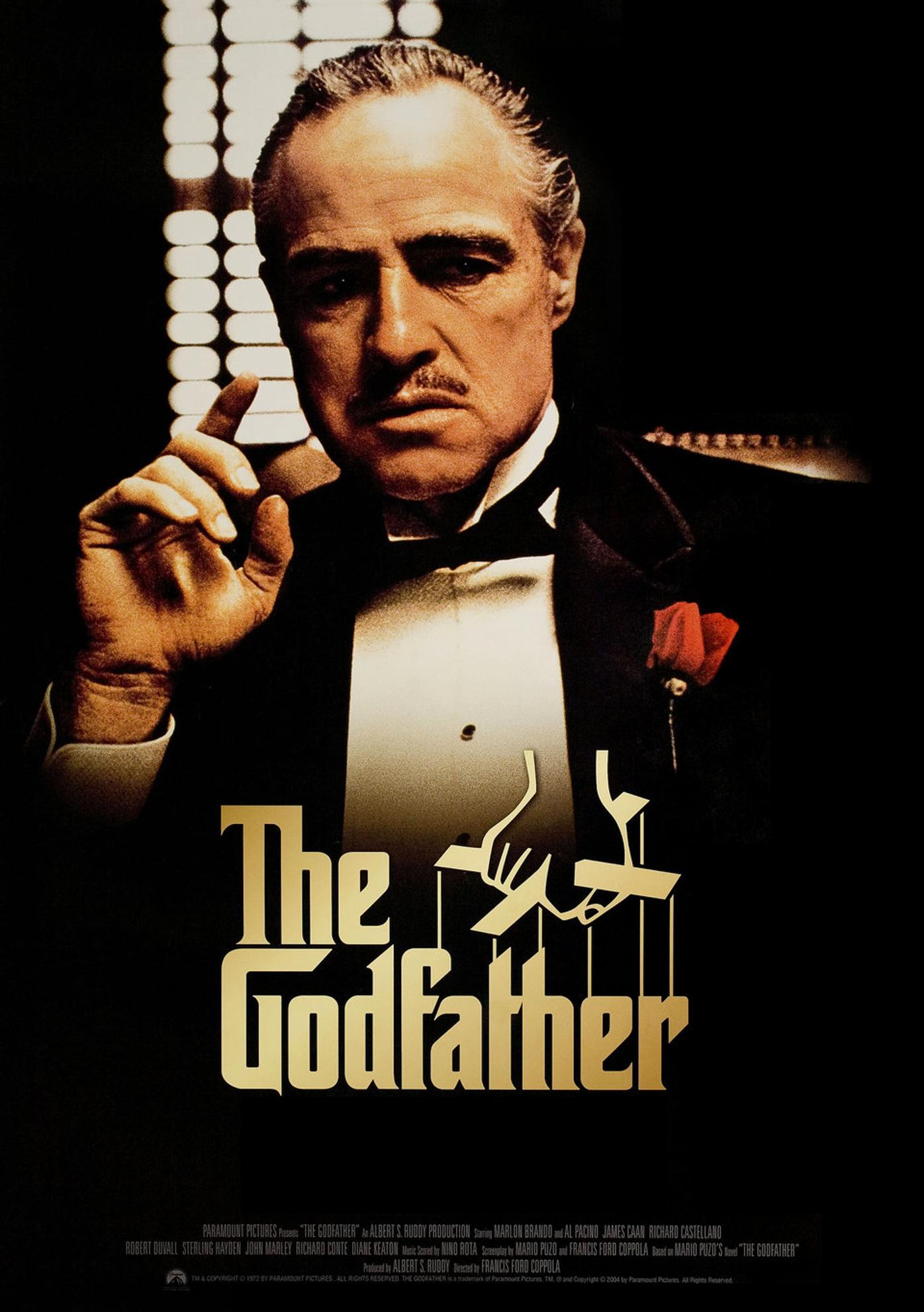
The
Godfather
IMDb Rating
1.9M
IMDb Votes
97%
Rotten Tomatoes
$246M
Box Office
Synopsis & Review
Directed by Francis Ford Coppola and adapted from Mario Puzo's 1969 bestselling novel, The Godfather is one of those rare films that didn't merely define a genre — it transcended it entirely. The story centers on Vito Corleone (Marlon Brando), the aging patriarch of a powerful New York crime family, who is nearly killed in an assassination attempt after refusing to back a rival gangster's narcotics operation. In the chaos that follows, his youngest son Michael (Al Pacino) — a war hero who had deliberately kept his distance from the family business — is slowly and inexorably drawn into the world of violence, loyalty, and power that he once believed he had escaped. What unfolds is not simply a crime saga but a Shakespearean meditation on family, legacy, ambition, and the corrupting nature of power told with the weight and sweep of an American epic.
What elevates The Godfather beyond the reach of virtually every film that has tried to follow in its footsteps is the totality of its craft. Coppola and cinematographer Gordon Willis — nicknamed "The Prince of Darkness" — created a visual language built on shadow and candlelight that transformed every frame into something that resembles a Renaissance painting. Nino Rota's immortal score, mournful and inevitable, seems to breathe the weight of fate into every scene. Marlon Brando's performance as Don Vito Corleone is arguably the single greatest in cinema history — a man of quiet menace and genuine warmth who holds absolute power with the dignity of a king. Al Pacino's Michael is his equal and opposite: cold where Vito is warm, precise where Vito is instinctive. The film won three Academy Awards, including Best Picture, and has remained the benchmark against which all crime films — and many films in general — are measured. More than fifty years after its release, it has lost nothing. It is not merely great cinema; it is the grammar of great cinema.
Why Watch This Movie?
The Greatest Performance in Cinema History
Marlon Brando's portrayal of Don Vito Corleone is studied in every serious film school on earth. He communicates power through stillness, warmth through restraint, and menace through whisper. His Oscar-winning performance set a new ceiling for what screen acting could be — and most actors have spent their careers trying to reach it.
A Visual Language That Changed Cinema
Gordon Willis's cinematography — deep shadows, candlelit faces, rooms where darkness swallows the edges of the frame — created an entirely new aesthetic for American film. Every shot is a composition. Every scene feels like it has the weight of history behind it. Watching The Godfather is like standing in front of a masterwork painting that happens to move.
The Definitive Story of Power and Its Cost
At its heart, The Godfather is a tragedy about what power does to a man. Michael Corleone begins the film as the family's idealist — the one who got out — and ends it as something colder and emptier than the men he replaced. That transformation is one of cinema's most harrowing and perfectly constructed character arcs, and it resonates long after the credits roll.
Cast & Crew
Director
Francis Ford Coppola
Screenplay
Mario Puzo & Coppola
Based On
Novel by Mario Puzo
Don Vito Corleone
Marlon Brando
Michael Corleone
Al Pacino
Sonny Corleone
James Caan
Cinematography
Gordon Willis
Original Score
Nino Rota
Studio
Paramount Pictures
Official Trailer
© Paramount Pictures. Trailer embedded via YouTube.
Frequently Asked Questions
Is The Godfather based on a true story?
While The Godfather is not directly based on a single true story, Mario Puzo drew heavily on real events, figures, and the documented history of the American Mafia when writing his novel. The Corleone family is a composite inspired by several real crime dynasties, including the Gambino and Genovese families. Vito Corleone's character was partly inspired by real-life mob boss Frank Costello. Puzo, who grew up in the Hell's Kitchen neighborhood of New York, had extensive knowledge of organized crime culture, and the film's authenticity has long been recognized — including by actual members of the Mafia, some of whom reportedly tried to discourage its production.
How many Academy Awards did The Godfather win?
The Godfather was nominated for ten Academy Awards at the 1973 ceremony and won three: Best Picture, Best Actor (Marlon Brando), and Best Adapted Screenplay (Mario Puzo and Francis Ford Coppola). Marlon Brando famously refused the Oscar, sending Native American activist Sacheen Littlefeather in his place to protest Hollywood's treatment of Indigenous peoples. The film also received nominations for Best Director, Best Supporting Actor (both James Caan and Robert Duvall), Best Costume Design, Best Film Editing, and Best Sound.
Why did Marlon Brando stuff his cheeks for the role?
Marlon Brando stuffed his cheeks with cotton wool during his screen test and later used a custom dental mouthpiece during filming to give Vito Corleone his distinctive jowly, world-weary appearance. Brando wanted the Don to look like a bulldog — a man whose face bore the weight of decades of power and compromise. The transformation was purely physical and intentional: Brando believed the character's face should tell his story before he ever opened his mouth. It is one of the most famous examples of physical character work in film history, and it became inseparable from the role.
More Movies Like This
If you loved The Godfather, these films belong on your watchlist.