The
Incredibles
IMDb Rating
1.0M
IMDb Votes
97%
Rotten Tomatoes
$631M
Box Office
Synopsis & Review
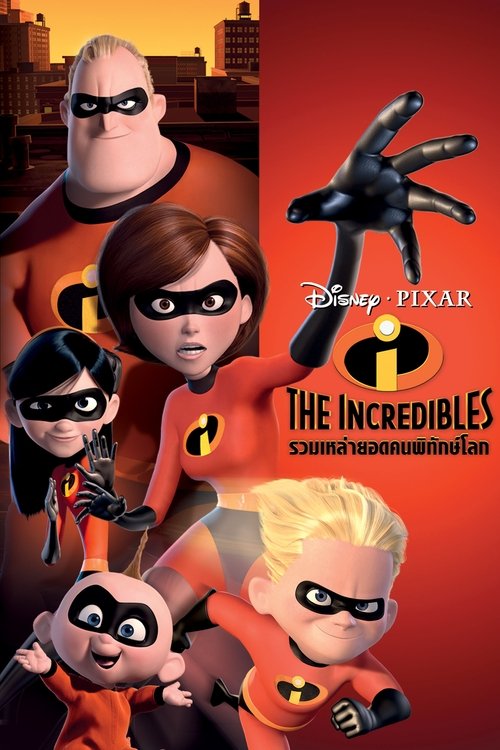
Written and directed by Brad Bird and released in 2004, The Incredibles is the most intellectually ambitious animated film Pixar had made to that point — a work that uses the conventions of superhero cinema to explore, with genuine psychological depth, the tension between individual exceptionalism and communal conformity, the specific pressures of midlife and mediocrity, and the ways in which families both contain and release the remarkable potential of their members. Bob Parr (Craig T. Nelson), formerly the superhero Mr. Incredible, now lives in suburban anonymity with his wife Helen (Holly Hunter), formerly Elastigirl, and their three children — Violet, Dash, and baby Jack-Jack — in a world where superheroes have been forced underground by lawsuits from people they have saved. Bob, who was always addicted to the scale and significance of his former life, secretly moonlights as a hero on the side, until a mysterious invitation from a shadowy figure on a remote island draws him back into action — and into a trap set by Syndrome (Jason Lee), a former fan-turned-villain whose grievance against Mr. Incredible has curdled over two decades into a comprehensive plan to destroy all superheroes and make everyone "super" by eliminating the concept of genuine exceptionalism entirely. When Bob is captured, Helen and the children must break their own cover to save him, and the family discovers that their powers, which each of them has been trained to suppress, are most effective when used together.
What makes The Incredibles so genuinely distinguished is the seriousness — and the sophistication — of its thematic architecture. The film is simultaneously a satire of superhero genre conventions, a darkly funny portrait of suburban male midlife crisis, a marriage drama, and a family adventure, and it holds all of these registers with equal confidence. Brad Bird, who came to Pixar from a frustrating experience on the Fox animated series The Simpsons and the underperforming Warner Bros. film The Iron Giant, brought to The Incredibles a distinctive ideological position — a genuine belief in individual excellence and the right of the exceptional to be exceptional, which gives the film a tension and a specificity that most animated family films deliberately avoid. Michael Giacchino's jazz-inflected score — which borrowed its sonic vocabulary from John Barry's James Bond compositions and Lalo Schifrin's 1960s spy music — was a deliberate evocation of the retro-futurist aesthetic of the film's mid-century setting and became one of the most distinctive animated film scores of the decade. The film won two Academy Awards — Best Animated Feature and Best Sound Editing — and was nominated for three others. It grossed $631 million worldwide and was followed by a sequel, Incredibles 2, in 2018, which grossed over $1.2 billion and broke the opening weekend record for an animated film.
Why Watch This Movie?
The Best Superhero Film Before the MCU Era
Released four years before Iron Man launched the MCU, The Incredibles was the most complete, the most intelligent, and the most cinematically accomplished superhero film that had ever been made. It understood the genre's conventions well enough to use them as a vocabulary for something personal and specific, and it delivered action sequences of a kinetic sophistication that live-action superhero films would not match for years. It remains, by many measures, the best superhero film of the 2000s.
Edna Mode — One of Cinema's Great Comic Characters
Brad Bird voiced Edna Mode himself, originally as a placeholder, and the character became so perfectly realized that no one else was ever considered. The imperious, brilliant costume designer — based partly on Edith Head and partly on Linda Hunt — operates as the film's Greek chorus, the external voice of the characters' own inner confidence, and the source of several of the most quoted lines in any animated film. "No capes!" is a philosophy of life. Her eight minutes of screen time constitute one of the most concentrated comedic performances in Pixar history.
A Marriage Drama That Genuinely Works Inside a Superhero Film
The relationship between Bob and Helen Parr is one of the most honestly depicted marriages in animated cinema — a partnership between two people of equal capability who have negotiated an unequal compromise, and who are dealing with the resentments and silences that compromise produces. Holly Hunter's Helen is the film's moral center: a woman of extraordinary competence who has subordinated her own identity to the needs of her family, and who is wiser, tougher, and more practical than the husband she has chosen to protect. Their reconciliation, which comes through shared crisis rather than declaration, is genuinely moving.
Cast & Crew
Director
Brad Bird
Screenplay
Brad Bird
Producer
John Walker
Bob / Mr. Incredible (voice)
Craig T. Nelson
Helen / Elastigirl (voice)
Holly Hunter
Frozone (voice)
Samuel L. Jackson
Syndrome (voice)
Jason Lee
Edna Mode (voice)
Brad Bird
Original Score
Michael Giacchino
Official Trailer
© Pixar Animation Studios / Walt Disney Pictures. Trailer embedded via YouTube.
Frequently Asked Questions
What is the film's political philosophy — is Syndrome right or wrong?
The film's political philosophy is genuinely contested and has been the subject of substantial critical debate since its release. Syndrome's argument — "When everyone's super, no one will be" — is a statement about the way the concept of exceptionalism depends on the existence of mediocrity to have meaning, and about the resentment that genuine inequality of talent can generate in those who lack it. Brad Bird has been explicit that the film endorses the proposition that people of exceptional ability should be free to be exceptional, and that the suppression of excellence for the sake of enforced equality is a form of cruelty. Critics, particularly from a more egalitarian political perspective, have noted that this reading aligns the film uncomfortably with Ayn Rand's philosophy of rational self-interest and contempt for mediocrity. The film is best understood not as a political treatise but as a personal drama in which the political arguments function as metaphors for individual psychological states — Bob's midlife crisis, his need to feel significant, his difficulty accepting the compromises that family life requires — rather than literal political statements.
Why did Brad Bird choose to set the film in a retro 1960s aesthetic?
The mid-century modernist aesthetic of The Incredibles — the retrofuturist architecture, the sleek Eero Saarinen-influenced furniture, the James Bond-era spy film visual vocabulary — was a deliberate creative decision by Brad Bird for several interconnected reasons. Practically, it solved the problem of depicting human characters in CGI animation: the stylized, non-realistic proportions of 1960s illustration — elongated limbs, simplified features, graphic clarity — allowed the animators to create human characters that were expressive and appealing without falling into the uncanny valley that plagued photorealistic CGI human characters at the time. Aesthetically, it created a visual world with a specific period identity that felt both historically grounded and fantastical. And thematically, the 1960s setting evokes a period of genuine cultural optimism about human capability — the Space Age, the belief in technological progress and human ingenuity — that rhymes with the film's argument about the value of exceptionalism and the cost of its suppression.
Is Incredibles 2 worth watching after the original?
Incredibles 2 (2018) is a worthy if not quite equal sequel that arrived fourteen years after the original and grossed over $1.2 billion worldwide — breaking the opening weekend record for an animated film at the time of its release. The film wisely inverts the original's domestic dynamic, sending Helen/Elastigirl into action while Bob stays home to manage the children — a structure that gives Holly Hunter more to do and addresses the original's relative imbalance in screen time between the two leads. The sequel introduces a genuinely creepy villain in the Screenslaver and delivers action sequences of comparable quality to the original. Most critics agree that it falls slightly short of the original's thematic depth and emotional weight — the original's exploration of Bob's midlife crisis gave it a specificity that the sequel's more plot-driven narrative doesn't quite match — but it is a significantly better animated sequel than most, and fans of the original will find it a satisfying continuation of the world and characters.
More 3D Films Like This
If you loved The Incredibles, these animated adventures will excite you just as much.