How to Train
Your Dragon
IMDb Rating
102K+
IMDb Votes
82%
Rotten Tomatoes
$685M
Box Office
Synopsis & Review
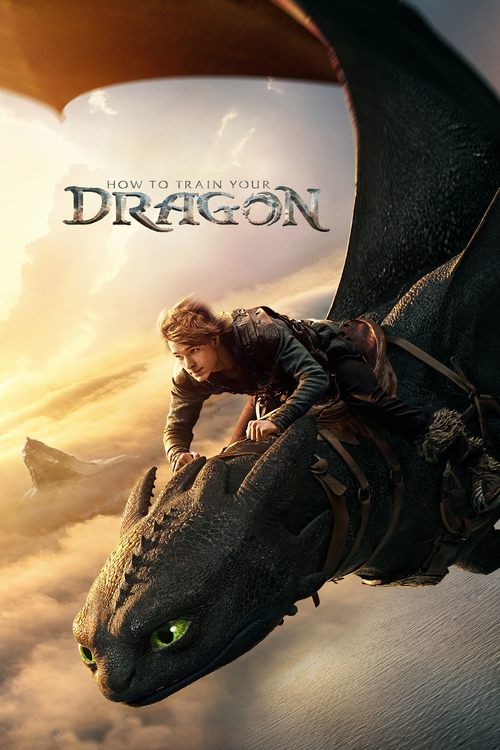
When Universal Pictures announced a live-action remake of How to Train Your Dragon, the response from fans of DreamWorks' beloved 2010 animated film was immediate and largely anxious. That anxiety was substantially — though not entirely — dissolved by the announcement that Dean DeBlois, the director who co-created the original film and helmed all three entries in the animated trilogy, would be returning to reimagine his own story with a live-action cast and contemporary visual effects technology. DeBlois's film follows the same narrative as the original: Hiccup Horrendous Haddock III (Mason Thames), the slight, bookish son of Berk's formidable Viking chief Stoick (Gerard Butler), has always struggled to fit into his clan's warrior culture. When he shoots down the rarest dragon in existence — a Night Fury he names Toothless — and discovers that the creature is injured and cannot fly without assistance, Hiccup faces a choice between the approval he has always craved and the friendship that has given him purpose for the first time in his life. That choice will eventually force every member of Berk to reconsider everything they believe about the dragons they have been fighting for generations.
DeBlois's live-action version is not a shot-for-shot reproduction of the animated original, nor a radical reimagining of it — it occupies a considered middle ground that honours the source material while finding new textures and tones that justify the re-adaptation. Mason Thames, best known from The Black Phone (2021), brings a quiet, naturalistic authenticity to Hiccup that grounds the film in a way that animation, however brilliant, could not entirely achieve. Gerard Butler returns as Stoick with something close to a definitive performance — the character's fierce, conflicted love for his son is written into every line of Butler's face in a way that the animated version always implied but never quite achieved. The decision to render Toothless primarily through digital visual effects was the film's highest-stakes creative gamble, and it pays off handsomely: the Night Fury is rendered with a physical weight and behavioural specificity that makes him feel genuinely alive. The first flight sequence, accompanied by John Powell's score, is as close to pure cinematic joy as 2025 produced. The film does not exceed its animated predecessor — a film that stands as one of the finest of its era — but it stands comfortably alongside it, which is exactly the right outcome.
Why Watch This Movie?
Toothless, Realised in Stunning Detail
The central question of any live-action How to Train Your Dragon is whether Toothless can survive the transition from animation to photo-realism without losing the expressive, cat-like personality that made audiences fall in love with him in 2010. The answer is an emphatic yes. The visual effects team spent over three years developing Toothless's live-action design — studying the movement and behaviour of large cats, birds of prey, and reptiles to construct a creature that feels physically plausible while remaining emotionally legible. The results are extraordinary: Toothless communicates complex emotions through subtle physical performance in a way that rivals the finest CGI character work in any film of the past decade.
The Director Who Knows the Story Best
The single most reassuring fact about this film — and the one that ultimately made it work — is that Dean DeBlois directed it. He knows exactly what matters about this story: not the dragon battles or the Viking spectacle, but the specific emotional logic of two outsiders finding in each other what they could not find in their own worlds. DeBlois does not betray that logic for a single scene. The film's quieter moments — Hiccup and Toothless working out their first mechanical tail fin together, Hiccup drawing Toothless in his notebook, the first flight — are handled with the same patient attention they received in the animated original.
John Powell's Score Returns — and Soars
John Powell composed one of the great animated film scores for the 2010 original — a sweeping, Celtic-inflected orchestral work anchored by the iconic "Forbidden Friendship" theme that is among the most recognisable pieces of film music of the past two decades. Powell returns for the live-action version, expanding and re-orchestrating his themes for a live orchestra of greater size and with new cues that fit the slightly different dramatic pacing of the remake. The score is integral to the film's emotional effectiveness in the same way it was in the original, and Powell's work here is — if anything — even more technically accomplished.
Cast & Crew
Director
Dean DeBlois
Screenplay
Dean DeBlois
Studio
Universal / DreamWorks
Hiccup
Mason Thames
Astrid
Nico Parker
Stoick
Gerard Butler
Gobber
Nick Frost
Toothless
Digital / Motion Capture
Original Score
John Powell
Official Trailer
© Universal Pictures / DreamWorks Pictures. Trailer embedded via YouTube.
Frequently Asked Questions
Is the live-action version faithful to the 2010 animated film?
Yes — substantially so. The 2025 live-action film follows the same core story as the 2010 animated original: Hiccup shoots down and befriends Toothless, their bond challenges the Viking tradition of dragon killing, and the truth about the dragons' behaviour ultimately changes Berk forever. The film preserves all of the original's major beats, relationships, and emotional arc. The most significant departures are tonal and contextual rather than structural: the live-action setting allows DeBlois to explore the physicality of the Viking world and the danger of dragons with a slightly greater realism, and certain scenes have been extended or deepened to take advantage of live performance. The story, however, is the one fans remember and love.
Why did Gerard Butler return as Stoick rather than a new actor?
Dean DeBlois has stated in interviews that casting Gerard Butler as Stoick was a deliberate and emotionally motivated decision. Butler voiced Stoick in all three animated films and developed such a specific understanding of the character's emotional complexity — particularly his inability to express love openly to a son he cannot understand — that DeBlois felt recasting the role would inevitably result in a shallower performance. Butler himself was enthusiastic about the transition, and the result validates the choice: his live-action Stoick is, by widespread critical consensus, the finest performance in the film. The physical casting also works naturally — Butler's imposing frame and natural command of authority make the character's presence immediately felt.
Will sequels adapting How to Train Your Dragon 2 and The Hidden World be made?
Universal Pictures and DreamWorks have confirmed that sequels are in development, contingent on the continued commercial performance of the franchise. Given the first film's $685 million box office gross — well above the threshold Universal required to greenlight follow-up productions — live-action adaptations of How to Train Your Dragon 2 and The Hidden World are effectively confirmed, though no official release dates have been announced as of mid-2025. Dean DeBlois has expressed willingness to continue directing the series, and the principal cast have all indicated their intent to return. An announcement regarding the second film is expected in late 2025 or early 2026.
Is the film appropriate for young children who loved the animated original?
The film is rated PG and is broadly suitable for children who enjoyed the animated original, though parents of very young or sensitive children should note that the live-action context makes the film's dragon attack sequences and battle scenes somewhat more viscerally intense than their animated equivalents. The emotional stakes — particularly around Hiccup's relationship with Stoick and the themes of belonging and acceptance — are handled with similar depth to the original. Most children aged seven and older who loved the animated trilogy should be fully comfortable. The film does not contain content inappropriate for family audiences, but it is a notably more grounded and physically present experience than the animation.
More Movies Like This
If you loved How to Train Your Dragon, these films belong on your watchlist.